Muscle Myths We’re Done With!
Strength training has finally become part of the mainstream conversation for women in midlife and that is excellent news. Building and maintaining muscle is one of the most powerful things you can do for metabolic health, bone density, joint stability, and long-term independence. However, alongside this growing interest has come a wave of oversimplified advice. Social media tends to favour extremes, but the reality is both more reassuring and more sustainable. Muscle development is governed by progressive overload, adequate protein intake, recovery, and consistency over time. When those foundations are in place, there are many different ways to build lean muscle.
Let’s look at three common myths.
- Myth 1 – Lifting heavy is the only way to build lean muscle: Heavy resistance training is certainly effective, but it is not the only pathway to muscle growth. Muscle develops when fibres are exposed to sufficient mechanical tension and metabolic stress. This can occur across a wide range of loads, provided the muscle is challenged close enough to fatigue. Research consistently shows that both heavier weights with lower repetitions and lighter weights with higher repetitions can stimulate muscle hypertrophy, as long as effort levels are high enough. For many women in midlife, moderate loads performed with good technique and controlled tempo may actually be more sustainable and joint-friendly. The goal is not simply to lift heavy. The goal is to progressively challenge the muscle over time.
- Myth 2 – You can only build muscle effectively in a gym: Gyms offer excellent equipment, but they are not the only environment where muscle can be built. Muscle responds to resistance, not to a specific location. Resistance can come from dumbbells, resistance bands, kettlebells, machines, or even bodyweight movements such as squats, push-ups, and step-ups. Home training programmes can be extremely effective when exercises are progressed appropriately. Increasing repetitions, slowing tempo, adding pauses, or advancing to more challenging movement patterns can all stimulate adaptation. For many women balancing careers, families, and multiple responsibilities, the ability to train effectively at home can actually improve consistency, which is the true driver of progress. The best training environment is simply the one you will use regularly.
- Myth 3 – Muscle builds quickly if you keep lifting: This myth often creates unrealistic expectations. Muscle growth is a slow biological process. Even under ideal conditions, the body can only synthesize new muscle tissue at a limited rate. Factors such as training experience, nutrition, sleep, and hormonal environment all influence this process. For most women beyond the beginner phase, visible changes in muscle mass occur gradually over months rather than weeks. The encouraging part is that progress compounds. Small improvements in strength, movement quality, and muscle tissue accumulate over time, creating significant changes in body composition, metabolism, and functional strength. Building muscle is less like a sprint and far more like a long-term investment.
Muscle is one of the most protective tissues we have as we age. It supports metabolic health, mobility, bone strength, and resilience. You do not have to lift the heaviest weights in the room to build it. You do not need a gym to stimulate it.
And it does not appear overnight.
What matters most is consistent resistance training, adequate protein intake, and patience. In midlife, building muscle is not about chasing perfection. It is about creating a body that is stronger, more capable, and better supported for the decades ahead.
Attention: New YouTube Feature!
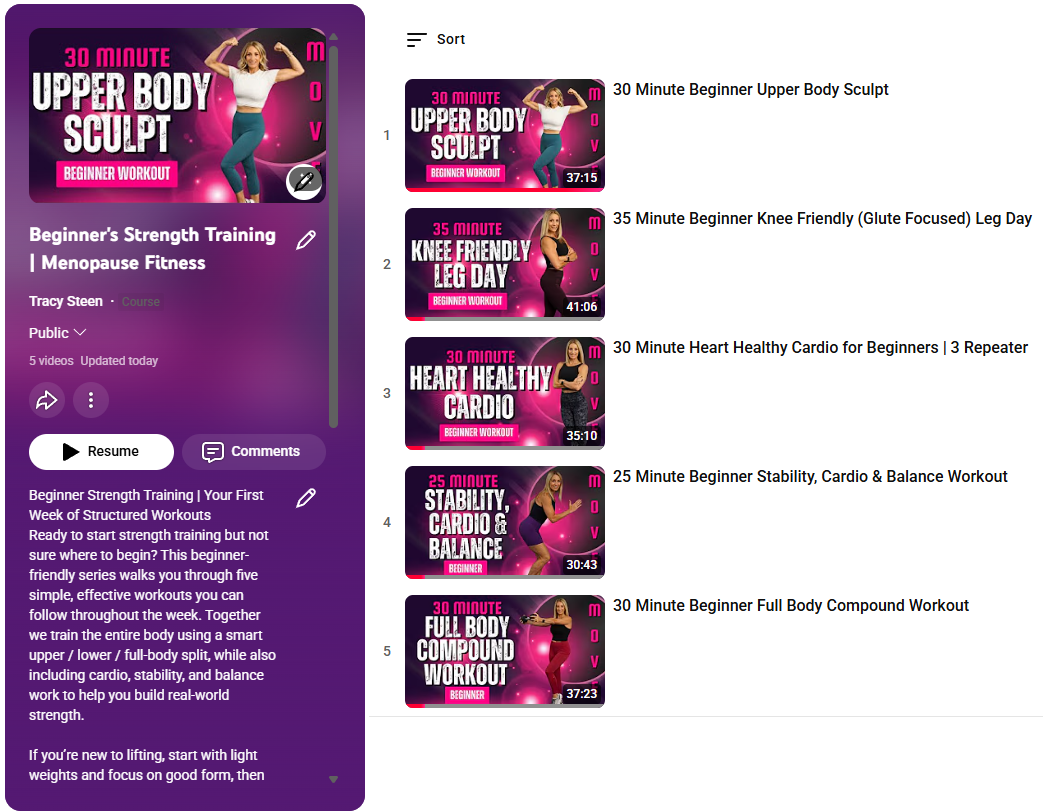
YouTube has introduced a really useful new feature and of course, you can try it out for free! If you look under “courses” on the YouTube channel you will see two sample courses for you to test out. It’s the same idea as the playlists, but named differently so that you can compile videos into “course content”.
Take a look at the new beginner course, or the new mixed option (which is 2 upper, 2 lower and 1 full body).
Join Tracy and Guests on Move Daily Talks
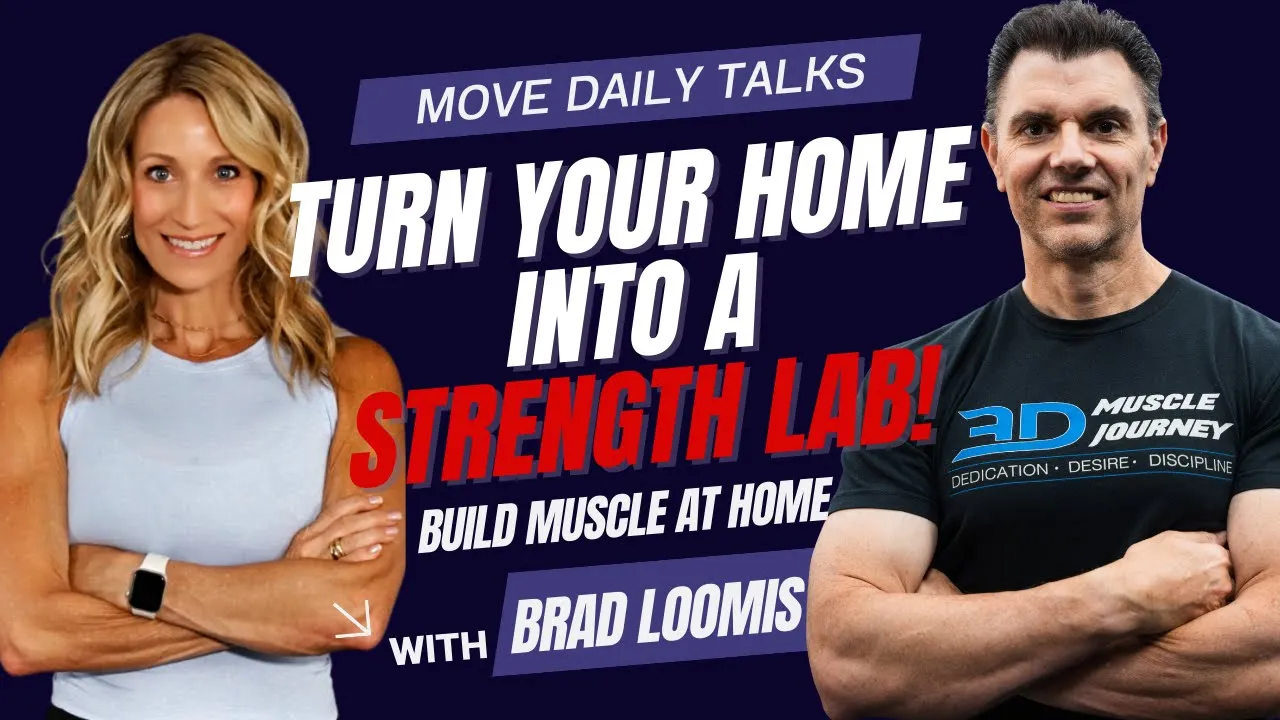
This week we’re revisiting a muscle centric podcast Tracy held with Brad Loomis. You can find this episode of Move Daily Talks here for you to listen to, learn from and enjoy. Or watch it on YouTube.
This Weeks Workouts!
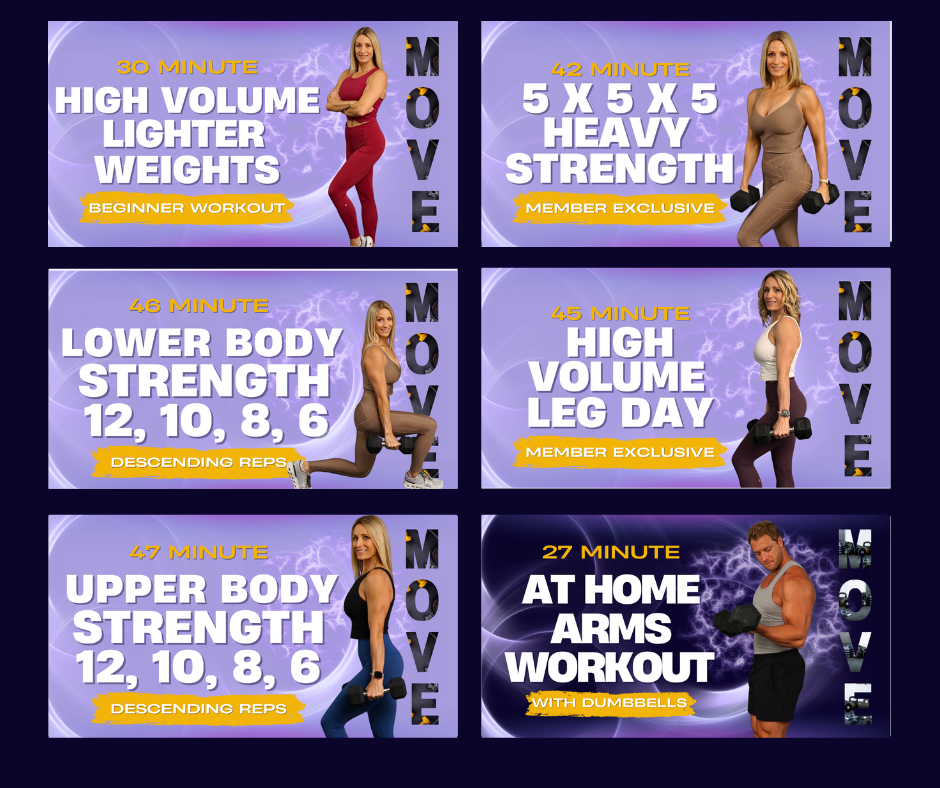
Here is your handy reminder of the current week’s workouts. All of the workouts are available either free via the YouTube channel, or are the Members Exclusive workouts, which you can access if you sign up to our Membership. Don’t forget that the workouts are released across the week and so make sure you are signed up for YouTube notifications by subscribing to the channel.