
The Secret Shame of Midlife Disordered Eating
Disordered eating and binge eating are far more common in midlife women than most people realize, and they are also far more hidden. I see these patterns existing quietly alongside outwardly “healthy” lives, stable careers, families, and a long history of dieting success in younger years. Because of that, many women do not recognize their own behaviour as disordered at all. It is often framed internally as discipline, control, or a necessary response to a body that no longer behaves as it once did.
For many women, the origin is not food itself, but control over body weight. Earlier adulthood may have been marked by relative thinness, predictable responses to dieting, and a sense that weight could be managed through effort alone. Midlife disrupts that equation. Hormonal changes, historic food habits and routines, altered stress physiology, sleep disruption, and reduced recovery capacity all change how the body responds to food. When familiar strategies stop working, I see many women respond by tightening control further rather than loosening it.
This is where disordered eating patterns often take hold. Disordered eating is not a diagnosis; it is an umbrella term describing behaviours that disrupt a healthy relationship with food. These can include chronic restriction, rigid food rules, cycles of “good” and “bad” eating, compensatory exercise, or repeated loss of control around food. Binge eating sits within this spectrum and refers to episodes of eating unusually large amounts of food in a short period, accompanied by a sense of loss of control. Importantly, binge eating is defined by the experience, not by the food itself. It can occur with “healthy” foods just as easily as with highly processed ones.
I have personally experienced binge eating during a period of trauma-related stress alongside significant over-exercising. The excessive daily calorie burn meant I found it extremely hard to use regular control around highly palatable foods. I have spoken about this openly in a podcast I recorded with Tracy in 2025.
Another commonly misunderstood term is binge eating disorder (BED), which is a clinical diagnosis characterized by recurrent binge episodes without compensatory behaviours such as purging. Many women experience binge eating behaviours without meeting diagnostic criteria for BED, which can make the behaviour easier to dismiss or minimize. Emotional eating, a term often used casually, describes eating in response to emotions rather than hunger, but it does not capture the compulsive, distress-based nature of binge episodes. Naming behaviour accurately matters, because vague language often obscures what is actually happening.
What makes midlife disordered eating particularly difficult is how invisible it is. Many women eat “well” in public, maintain exercise routines, and present as highly controlled. The disruption happens privately, often at night, often accompanied by shame and self-blame. Because weight loss is culturally rewarded, restrictive behaviours are praised even when they are part of a harmful cycle. This reinforces silence and delays recognition.
It is also critical for me to say clearly that these patterns are not a personal failure. They are a predictable response to decades of diet culture, repeated restriction, physiological change, and the pressure to maintain a younger body in a body that is biologically different. Understanding this removes moral judgment and allows behaviour to be examined objectively rather than emotionally.
If in reading this, you can recognize any of your own patterns and behaviours, please know that you are not alone. Just because we don’t talk about it, does not mean more women than you’ll ever know, aren’t impacted by it. Often because of the shame and the fear of judgement you may not feel able to speak to someone you know in your family or friendship group. However, there are incredible organizations you can reach out to.
We know our community hails from all over the globe, but we still wanted to mention some of the more major groups, if you need support. In the United States there is the National Eating Disorders Association. In Canada you have the National Eating Disorder Information Centre and in the UK, Beat is one of the leading charities.
Disordered eating in midlife is common, under-discussed, and often misunderstood. Naming it accurately is not about labels; it is about clarity. And clarity is the first step out of a cycle that thrives on silence.
Join Tracy and Guests on Move Daily Talks
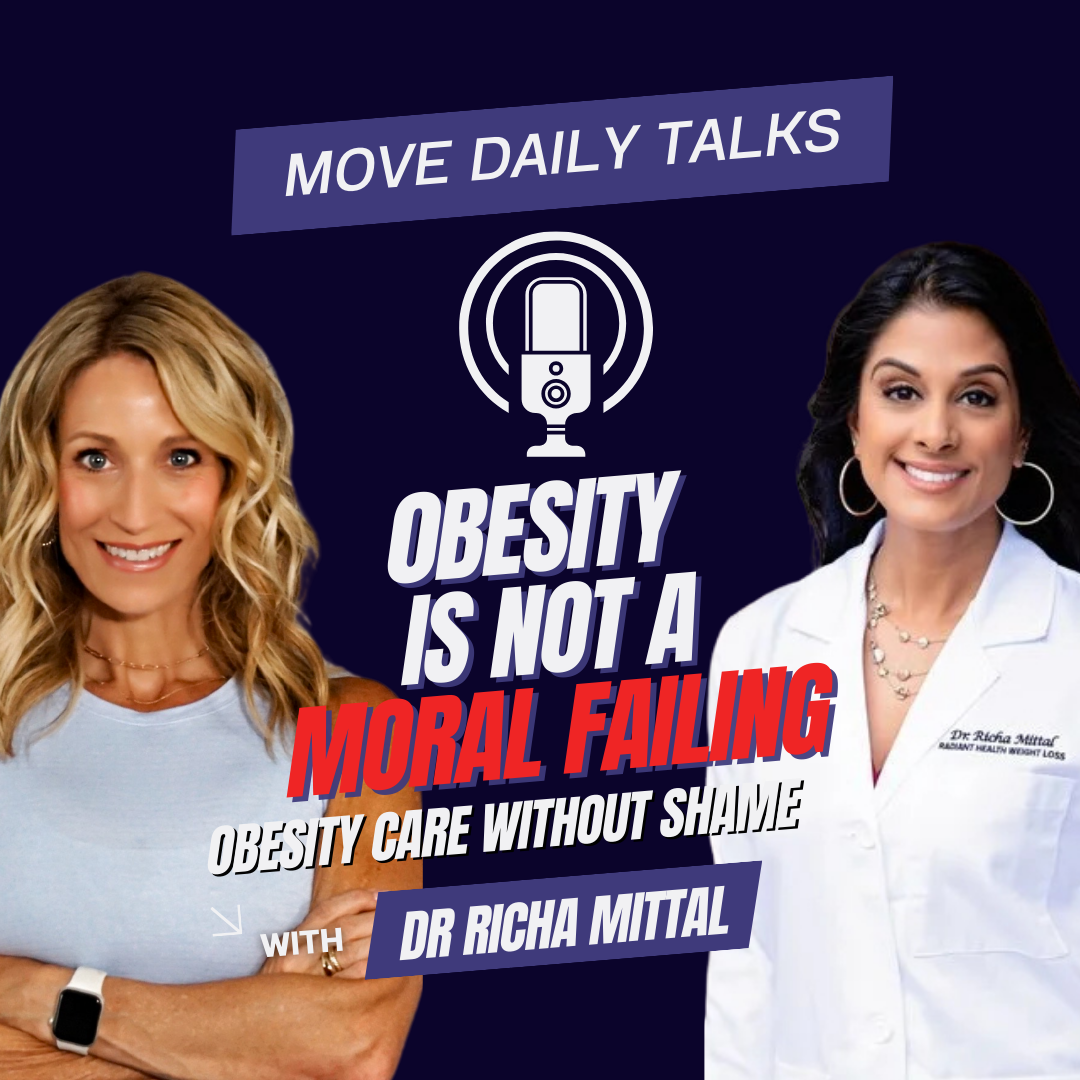
Every Saturday Tracy is joined by a special guest on her hugely successful, and informative podcast, Move Daily Talks. Here is the latest release for you to listen to, learn from and enjoy. Or watch it on YouTube.
This Weeks Workouts!
Here is your handy reminder of the current week’s workouts. All of the workouts are available either free via the YouTube channel, or are the Members Exclusive workouts, which you can access if you sign up to our Membership. Don’t forget that the workouts are released across the week and so make sure you are signed up for YouTube notifications by subscribing to the channel.